
Course Design
This page provides an overview of the design and structure of the Introduction to ESL blended course developed as part of this project. Rather than presenting the full course content, the sections below highlight key design decisions, instructional approaches, and organizational elements that guided the development of the course.
Course Overview
The Introduction to ESL course was designed as a blended learning experience for adult educators preparing to support English learners in K–12 classrooms. The course integrates online learning activities, multimedia instruction, and reflective practice to help participants explore key concepts related to language development and instructional strategies for multilingual learners.
The course emphasizes alignment between learning objectives, instructional activities, and assessment strategies. Participants engage with course materials through a combination of asynchronous learning resources, technology-supported activities, and reflective exercises designed to connect theory with practical classroom application.
Blended Learning
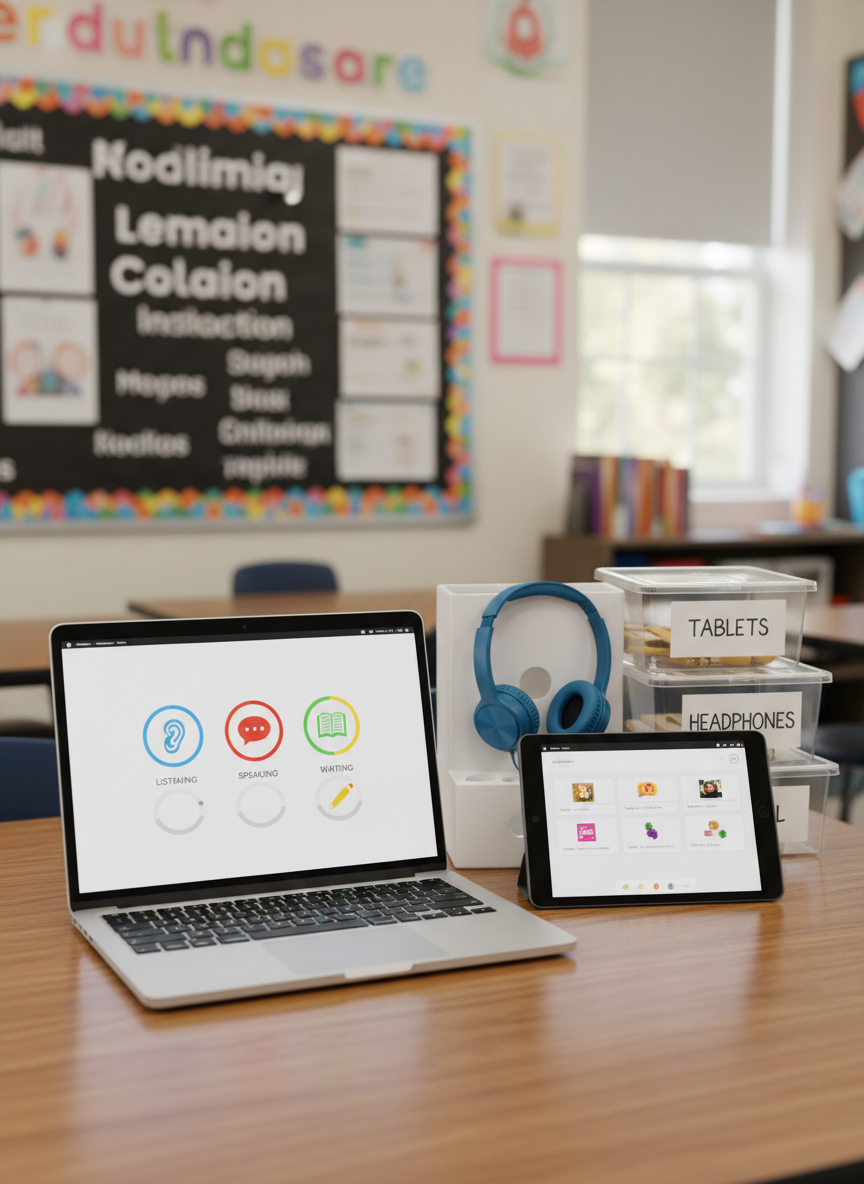
Blended learning provides opportunities to combine digital learning experiences with interactive and reflective activities that support deeper engagement with course content. In the Introduction to ESL course, blended learning was used to create a flexible learning environment where adult educators could explore instructional concepts through multimedia resources, structured activities, and reflective discussions.
The course incorporates asynchronous learning elements such as instructional videos, digital presentations, and online formative assessments that allow participants to engage with content at their own pace. These experiences are designed to support understanding of key topics related to language development, culturally responsive teaching, and instructional strategies for English learners.
Course Structure
The Introduction to ESL course is organized into modules that introduce key concepts related to supporting English learners in K–12 classrooms. Each module focuses on specific instructional topics such as language acquisition, culturally responsive teaching practices, and effective instructional strategies for multilingual learners.
Within each module, participants engage with a variety of learning materials designed to support both understanding and application of course concepts. These materials include multimedia presentations, flipped learning activities, technology-supported tasks, and reflective assignments that encourage participants to connect theory with classroom practice.
Assignments throughout the course were intentionally designed to model instructional strategies that educators can apply in their own classrooms. By incorporating digital tools, multimedia resources, and reflective activities, the course demonstrates how blended learning environments can support meaningful engagement and professional growth for educators working with English learners.

ASSURE Lesson Design
This one-week instructional unit demonstrates the intentional application of the ASSURE instructional design model within a blended ESL certification course for adult educators. By aligning learner characteristics, instructional strategies, technology integration, and assessment, the three lesson plans illustrate a cohesive approach to professional learning that supports communication, collaboration, and instructional readiness. Each lesson builds the previous one, progressing from foundational understanding to collaborative application and culminating in instructional planning aligned with language development and assessment expectations.
The integration of digital tools such as Canvas, Zoom, Canva, Padlet, and Edpuzzle was purposefully and grounded in adult learning principles, emphasizing accessibility, active engagement, and transferability to K-12 educational settings. Formative assessments embedded throughout the unit, including collaborative observation, interactive tasks, and Padlet exit tickets, provide multiple opportunities for reflection, feedback, and instructional revision. Collectively, this unit models effective technology-enhanced instruction and prepares teachers and administrators to apply ESL strategies and assessment-informed practices to better support English learners in their professional contexts.
 EL Teacher Resource Hub